After working in SEO for more than 15 years, I’ve realised something most agencies won’t admit:
Small businesses rarely lose because they “don’t do enough SEO.”
They lose because they invest in the wrong type of SEO too early.
I’ve seen local businesses spend thousands on monthly retainers before fixing basic service pages. Ecommerce stores publish 200 blogs while their category pages couldn’t rank for commercial keywords and agencies sell SEO services packages filled with reports, dashboards, and deliverables that looked impressive but never translated into revenue.
That’s one of the reasons so many small business owners become sceptical about SEO.
Many businesses don’t fail because SEO stopped working — they fail because they invested in the wrong priorities too early, especially when approaching affordable SEO for small businesses in the UK with a checklist mindset instead of focusing on what actually drives visibility and trust first.
But because the industry often sells activity instead of direction.
The truth is, most SEO packages for small business websites should feel simpler than people expect.
Not easier.
Just more focused.
Because when you strip away the jargon, Google still rewards the same fundamentals it always has.
It wants to understand who deserves visibility.
Not who can produce the most pages.
Not who can automate the most backlinks.
Not who can publish the most AI-written content in the shortest amount of time.
The businesses that usually perform best in search are the ones that create clear relevance over time.
Google wants to see:
- What your business genuinely specialises in
- Whether users trust your brand
- Whether your website solves a real search intent
- Whether other websites and people reference your business naturally
- Whether your content demonstrates actual expertise
That’s why SEO has become less about manipulation and more about validation.
And honestly, that shift has exposed a lot of weak SEO strategies.
I’ve watched businesses spend months chasing traffic spikes while ignoring the pages that actually generate revenue.
Meanwhile, smaller businesses with simpler websites quietly outperform them because their positioning is clearer.
That’s the part many businesses underestimate.
Google is no longer just ranking websites. It’s evaluating businesses.
That shift is becoming even more visible with the growth of AI-driven search experiences, where search engines increasingly prioritise trusted brands, clear expertise, and structured answers over websites built purely for traffic scaling — which is also why answer engine optimization (AEO) is becoming difficult for businesses to ignore.
That direction has become increasingly visible in Google’s own documentation around helpful content and people-first search experiences.
And it has become much harsher on websites trying to manufacture credibility instead of building it.
That’s why I think many businesses misunderstand what affordable SEO packages for small business websites should actually do.
Affordable doesn’t mean cutting corners.
It means prioritising the work that creates momentum first.
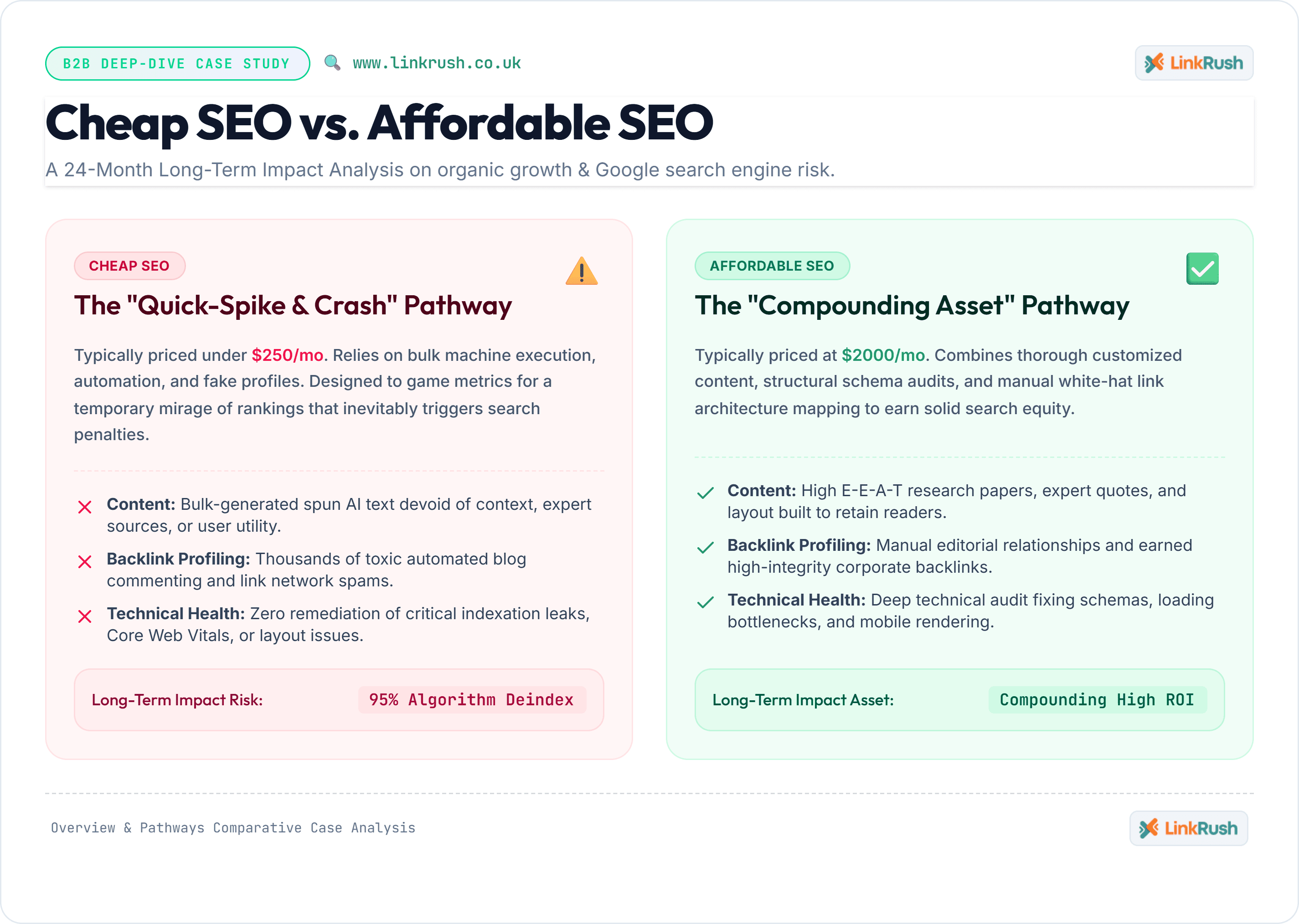
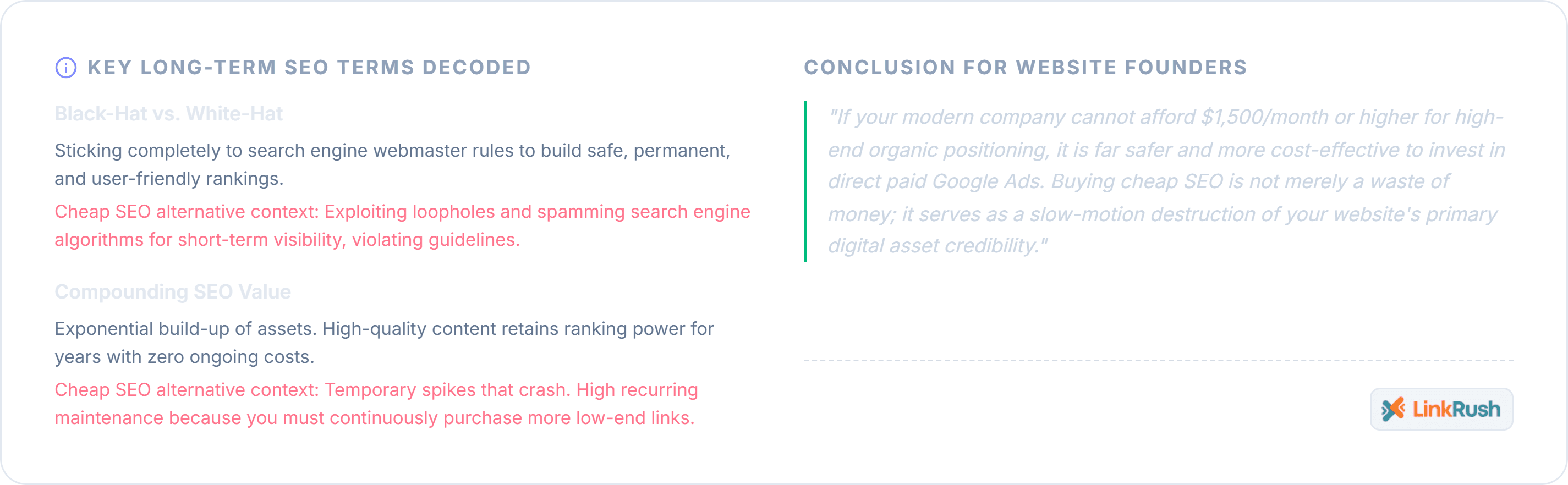
Cheap SEO : Usually focused on short-term visibility through scaled tactics, low-quality links, and generic deliverables that rarely build long-term trust, authority, or sustainable rankings.
Affordable SEO : Focused on building sustainable growth through stronger relevance, trusted authority signals, local visibility, helpful content, and long-term search performance aligned with real business goals.
What Most Small Businesses Actually Need First
After working with businesses across different industries, I’ve found that most small businesses usually don’t need a massive SEO campaign immediately.
They need stronger fundamentals first.
In many cases, the businesses that grow fastest in search are the ones that improve clarity before scale.
That usually means prioritising:
- Clear service pages aligned with search intent
- Local SEO visibility in the areas that actually generate revenue
- Strong internal linking across important pages
- Trust-building content that demonstrates real expertise
- Google Business Profile optimisation
- A small number of relevant, high-quality backlinks
- Conversion-focused pages designed to turn visibility into enquiries
Most businesses do not need 100 blog posts immediately.
And they usually don’t need aggressive link building campaigns before their core website structure makes sense.
What they need first is alignment. Google needs to clearly understand:
- what the business does
- which services matter most
- where the business is relevant
- why users should trust it
That often creates stronger momentum than simply producing more SEO activity every month.
Sometimes that’s local SEO.Sometimes it’s rebuilding service pages.Sometimes it’s fixing topical confusion across a site.Sometimes it’s brand reinforcement.
But it’s rarely everything at once.
That’s where many SEO packages in UK markets go wrong.
They try to look comprehensive from day one.
So businesses end up paying for:
- Excessive reporting
- Low-quality content production
- Generic backlinks
- Vanity keyword tracking
- Deliverables that create motion without traction
Many businesses also end up damaging long-term performance by pursuing aggressive link strategies before establishing enough contextual relevance across the website itself, which is one of the most common link building mistakes that quietly weaken rankings over time.
That’s also why businesses should understand the difference between scalable backlink tactics and links that genuinely strengthen subject depth over time, especially when comparing strategies like guest posting vs niche edits in modern SEO.
And after a few months, the business owner starts wondering why rankings aren’t turning into actual enquiries.
I’ve had conversations with business owners who ranked for thousands of keywords but still struggled to generate leads.
Because visibility without intent alignment is mostly noise.
That’s especially true as more search results become zero-click experiences, where visibility alone doesn’t always translate into traffic unless the business has improved trustworthiness and brand recognition.
That’s also why understanding why SEO results takes time becomes important. Businesses often expect traffic growth before establishing enough contextual relevance and authority to support sustainable rankings.
That’s why, if I were building SEO for a small business from scratch today, I’d approach it very differently than most agencies do.
I wouldn’t begin with scale.
I’d begin with positioning.
Why Most SEO Packages Fail Small Businesses
One thing I’ve noticed after years in SEO is that agencies often confuse complexity with value.
So small businesses get handed large retainers filled with disconnected tasks:
- Blog production
- Technical audits
- Link reports
- Keyword tracking
- Automated outreach
- Monthly dashboards
On paper, it looks comprehensive.
But when you actually look at the business itself, the foundations are usually weak.
The website messaging is unclear.The service pages aren’t competitive.The internal linking is inconsistent.The conversion flow is poor.
And the business hasn’t established enough contextual authority to justify broader rankings.
That’s why many SEO packages for small business websites struggle to produce meaningful growth.
They scale before establishing relevance.
And Google has become extremely good at identifying that.
A local business doesn’t need the same SEO structure as a national ecommerce brand.
A small law firm shouldn’t be using the same content strategy as a SaaS company.
And a trades business usually benefits more from dominating local intent than chasing broad informational traffic.
But many SEO services packages still apply the same framework to every business model.
That’s where results start breaking down.
Because search intent changes everything.
The strongest SEO campaigns usually feel aligned with the actual business.
Not templated around agency deliverables.
Who This Type of SEO Package Works Best For
Not every business needs the same SEO strategy.
In my experience, the businesses that usually benefit most from focused, long-term SEO are:
- Local service businesses trying to dominate search visibility in one region
- Trades companies competing in local markets
- Small ecommerce stores building category-level authority
- Law firms targeting high-intent local searches
- Service-based businesses relying on inbound enquiries
- Growing brands trying to improve niche expertise gradually
The common pattern is usually the same.
These businesses don’t need the biggest SEO campaign immediately. They need clearer positioning, stronger trust signals, and a strategy aligned with how customers actually search.
That’s where many smaller businesses outperform larger competitors online — not through scale, but through relevance and consistency.
What Small Businesses Actually Need From SEO
When I look at businesses that eventually become dominant in search, the pattern is usually predictable.
They don’t try to win every keyword immediately.
They become the clearest answer in a specific category first.
That’s an important distinction.
Because many SEO for small business packages are still built around traffic volume rather than business intent.
But traffic alone is rarely the goal.
A local accountant doesn’t need 100,000 visitors.They need the right 50.
A small law firm doesn’t need viral blog posts.They need search visibility when someone is ready to enquire.
And a growing ecommerce store usually benefits more from improving commercial pages than publishing endless informational content.
That’s why the strongest SEO campaigns I’ve worked on almost always started with clarity.
Not content quantity.
Not backlink volume but Relevance
Google needs to understand exactly what your business does, which services matter most, which pages deserve visibility, and why users should trust your business over competitors.
Most small business websites lose that clarity over time.
Not because they’re badly designed.
But because they evolve without structure.
New pages get added randomly.Services start overlapping.Old blogs compete against commercial pages.Internal links become inconsistent.
Eventually, the website starts diluting its own authority.
And that’s usually where a strong SEO package creates the biggest impact.
Not by producing more content.
But by rebuilding Relevance across the site.
I’ve seen websites increase enquiries without publishing a single new blog post — simply because their service pages became more focused and their internal structure made more sense.
That’s the side of SEO many agencies rarely talk about.
Sometimes growth comes from simplification.
Not expansion.
One thing I’ve learned after years in this industry is that local visibility compounds faster than national visibility.

That’s why local SEO packages often outperform broader campaigns for small businesses.
For many businesses, improving local relevance produces faster momentum than trying to rank nationally too early, particularly in competitive UK search markets.
A business that becomes dominant in one city usually builds authority much faster than a business trying to rank nationally too early.
And Google increasingly rewards businesses with real local trust signals.
That includes:
- Consistent business information
- Strong Google Business Profile activity
- Local relevance
- Branded searches
- Reviews
- Local mentions
- contextual aligned service pages
A good local SEO package should strengthen those signals gradually.
Not just produce location pages for the sake of scale.
Because local SEO isn’t really about adding city names to pages anymore.
It’s about proving market relevance.
The same applies to authority.
That’s especially true with link building, where relevance and trust now matter far more than raw backlink volume — especially for link building for small business websites competing in crowded search markets.
Fifteen years ago, SEO was heavily driven by volume.
More backlinks.More exact-match anchor text.More pages.
Now?
Google looks far more closely at credibility.
Even links that don’t directly pass traditional ranking signals can still contribute to visibility, discovery, and brand trust when they appear naturally within relevant ecosystems, which is part of the reason nofollow backlinks still help SEO in modern search environments.
That’s why modern SEO services packages need to think beyond rankings.
The businesses growing consistently in search today are usually building:
- Brand recognition
- contextual depth
- Useful content
- Real mentions
- Trust signals
- Clear expertise
And ironically, that often produces stronger rankings naturally.
Because Google increasingly wants businesses that look real — not websites engineered purely for algorithms.
The Difference Between Cheap SEO and Affordable SEO
There’s a difference.
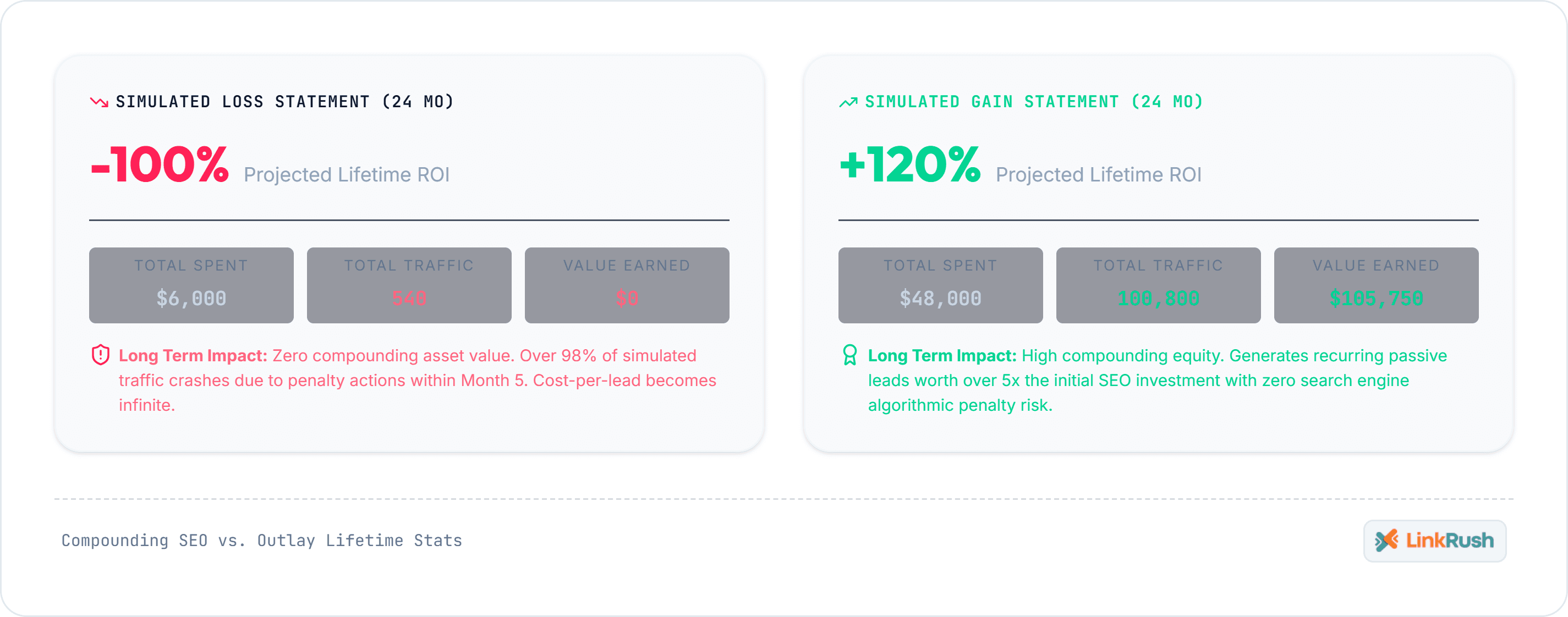
Cheap SEO tries to reduce cost. Affordable SEO tries to maximise return.
That distinction matters.
Because businesses searching for affordable SEO packages for small business websites usually aren’t looking for “cheap.”
They’re looking for:
- Predictable pricing
- Clear deliverables
- Real communication
- Sustainable growth
- Better ROI from search
That’s why fixed price SEO packages have become more popular recently.
Businesses want Relevance .
Not vague retainers with undefined work.
What Should Be Included in a Monthly SEO Package?
A strong monthly SEO package usually includes a combination of:
Area | What Matters |
Technical SEO | Crawlability, indexing, speed, structure |
Content Optimisation | Improving existing pages before publishing endlessly |
Internal Linking | Helping Google understand topical relationships |
Link Building | Relevant authority, not spam volume |
Local SEO | GBP optimisation and local relevance |
Reporting | Clear business-focused reporting |
The best SEO services packages focus on momentum.
Not random isolated tasks. Because SEO compounds.
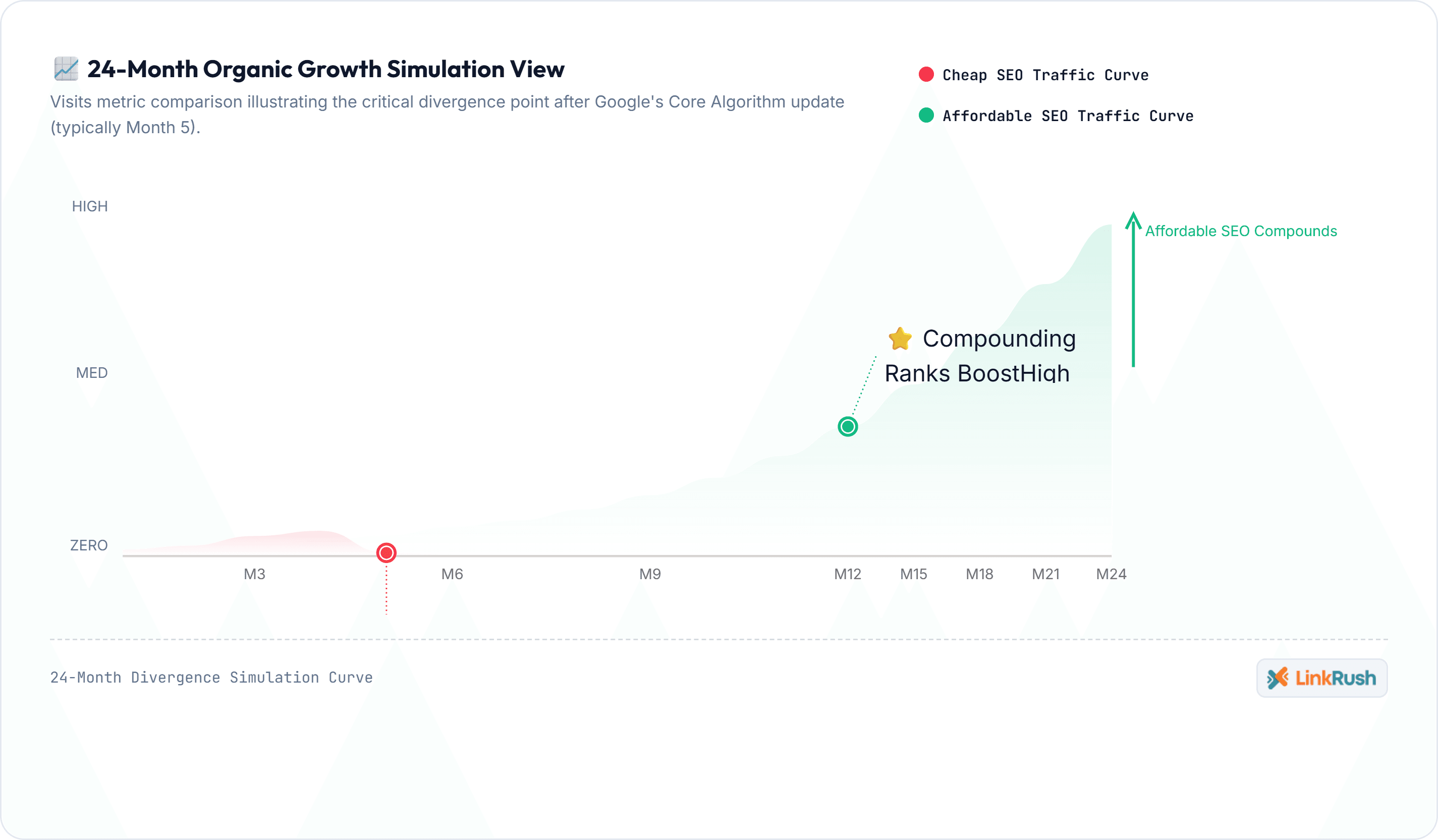
Even major SEO platforms like Moz consistently highlight the long-term nature of industry recognition building, while Ahrefs emphasises how search visibility growth develops gradually over time rather than overnight.
As Ahrefs notes,
“To rank #1 for a keyword, you need to demonstrate to Google that you’re the best, most relevant, and most helpful result.”
Moz also reinforces the importance of sustained credibility signals, explaining that
“Websites with a diverse and high-quality backlink portfolio tend to score higher.”
Small improvements across:
- Rankings
- Click-through rates
- Internal linking
- Topical relevance
- User behaviour
…often outperform aggressive short-term tactics.
SEO Package Prices UK: What Businesses Should Expect
One of the biggest questions businesses ask is:
“How much should SEO actually cost?”
The answer depends on:
- Competition
- Website quality
- Business goals
- Industry difficulty
- Geographic targeting
- Content requirements
But realistically, SEO package prices UK businesses pay usually fall into three ranges.
Entry-Level SEO Packages
Best for:
- New websites
- Local startups
- Businesses targeting low-competition keywords
Usually focused on:
- Local SEO
- Core optimisation
- Foundational content
- Technical cleanup
Growth SEO Packages
Best for:
- Businesses already getting some traffic
- Companies expanding into more competitive keywords
- Brands building topical industry recognition
Usually include:
- Content strategy
- Link acquisition
- Conversion improvements
- Internal linking systems
- Advanced local SEO
Ecommerce SEO Packages
Ecommerce SEO packages are different.
Because ecommerce SEO is usually a scale problem.
You’re dealing with:
- Category pages
- Product pages
- Duplicate content
- Crawl budget
- Faceted navigation
- Commercial intent optimisation
That’s why ecommerce SEO packages often require stronger technical SEO and information architecture.
For many ecommerce stores, improving category pages produces faster results than publishing endless blog content because commercial intent pages usually carry far more revenue potential than informational traffic alone.
Why Small Businesses Should Avoid “Guaranteed Rankings”
Any SEO package promising guaranteed rankings should raise questions.
Because rankings depend on:
- Competition
- Search intent
- Website quality
- Authority
- User behaviour
- Algorithm changes
No agency controls Google which is exactly why reputable SEO providers avoid promising guaranteed rankings.
Good SEO is about improving probability.
Not selling certainty.
That’s also why realistic SEO takes time.
Especially in competitive UK markets.
Frequently Asked Questions About SEO Packages
How much should SEO cost for a small business in the UK?
There’s no single fixed price for SEO because every business enters search at a different stage. A local trades business targeting one city will naturally require less work than an ecommerce store competing nationally across hundreds of products.
For most small businesses in the UK, SEO pricing usually reflects the level of competition, the quality of the existing website, and how much reputation needs to be built over time.
What matters most isn’t finding the cheapest SEO package. It’s finding an SEO strategy that focuses on meaningful growth instead of producing reports and activity without business impact.
Are monthly SEO packages worth it?
They can be — but only when the work being done each month contributes to long-term visibility rather than repetitive deliverables.
SEO compounds gradually. A stronger internal linking structure, better service pages, improved local trust signals, and more relevant authority can build momentum over time. That’s why many businesses benefit from ongoing SEO rather than one-off optimisation.
The problem is that many monthly SEO packages focus too heavily on quantity. More reports, more blog posts, more tracked keywords. But sustainable growth usually comes from improving the areas that directly influence search visibility and conversions.
How long does SEO take to work?
SEO rarely works instantly because Google needs time to evaluate trust, relevance, and consistency across a website.
Some local businesses may start seeing early movement within a few months, especially in lower competition areas. More competitive industries often take longer because stronger credibility signals are required before rankings improve consistently.
The timeline usually depends on factors like competition, website quality, existing authority, search intent alignment, and how clearly the business communicates expertise online.
That’s why SEO tends to work best when businesses approach it as a long-term growth channel rather than a short-term campaign.
What’s included in local SEO packages?
A strong local SEO package is usually focused on helping Google understand that a business is genuinely relevant within a specific area.
That often includes improving Google Business Profile visibility, strengthening local service pages, fixing business information consistency, improving internal linking, and building local trust signals through reviews and mentions.
The goal isn’t simply to add city names across a website. Local SEO works best when the website, business profile, and overall online presence consistently reinforce local relevance and credibility.
Should small businesses choose fixed-price SEO?
For many small businesses, fixed-price SEO packages can provide relevance and predictability, especially when budgets are tighter and business owners want a clear understanding of what’s being delivered each month.
But pricing structure alone doesn’t determine SEO quality. A fixed-price package still needs a clear strategy behind it. If the work is disconnected from the business goals, even an affordable package can become expensive over time.
The strongest SEO campaigns usually focus less on ticking off deliverables and more on improving visibility, credibility, trust, and conversion potential in a way that aligns with how the business actually grows.
What I’d Prioritise If I Were Starting Again
If I had to build a small business website from scratch today, I wouldn’t start by chasing massive traffic numbers.
I’d focus on:
- High-intent service pages
- Strong internal linking
- Local search visibility
- Trust-building content
- Consistent relevance signals
Then I’d scale.
Because early SEO momentum usually comes from precision.
Not publishing volume for the sake of activity.
The Best SEO Packages for Small Business Are Usually Boring
Not flashy.
Not overloaded.
Not filled with meaningless metrics.
Just consistent improvements in the areas that actually influence search visibility:
- Site structure
- Search intent alignment
- Trustworthiness
- Local relevance
- Helpful content
- Technical Relevance
That’s what sustainable SEO usually looks like.
And for most businesses, that approach outperforms aggressive shortcuts over time.
Final Thoughts
Most businesses don’t need the biggest SEO package.
They need the right one.
A strategy aligned with:
- Their stage
- Their market
- Their competition
- Their budget
- Their growth goals
Because SEO works best when it becomes part of the business foundation — not just another monthly service.
And the businesses that usually win search long term are the ones building relevance, trust, and clarity consistently
That’s also why modern SEO increasingly overlaps with digital PR, brand mentions, and reputation building rather than isolated ranking tactics alone, especially how AI Transforms PR Mentions and Link Building influence search visibility.
Not the ones trying to game algorithms every month.
Ready to Build SEO That Actually Compounds?
Most small businesses don’t need more SEO activity.
They need clearer positioning, stronger trust signals, and a strategy aligned with how customers actually search.
That’s why sustainable SEO usually performs better than aggressive short-term tactics over time — especially for businesses trying to build long-term visibility, authority, and consistent inbound enquiries.
If you’re looking at improving rankings, local visibility, and long-term search growth more strategically, LinkRush focuses on affordable SEO services for small businesses built around sustainable growth rather than inflated deliverables.