If you’ve are working hard on your SEO, you may notice something strange:
Your rankings are solid, but your traffic isn’t growing.
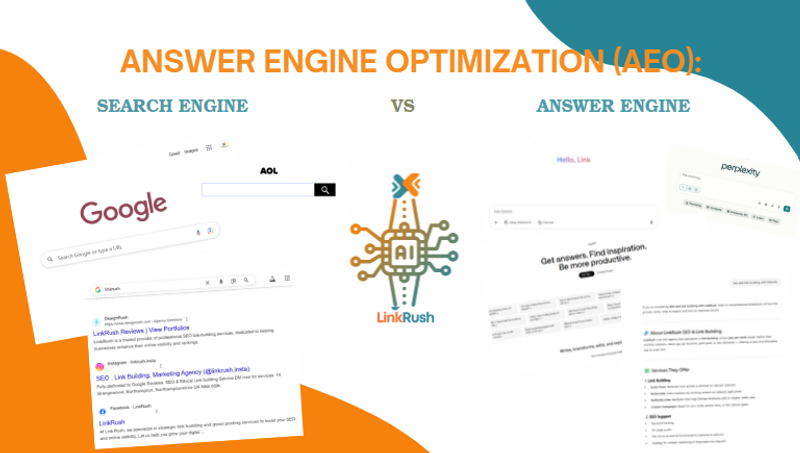
That’s because search methods are changing—fast. AI-powered search results like Google’s AI Overviews, ChatGPT, and tools like Perplexity are giving users answers without them having to click on your site.
Welcome to the era of Answer Engine Optimization (AEO).
What Is AEO, Exactly?
Answer Engine Optimization (AEO) is the practice of structuring your content so that AI-powered search engines can easily find, understand, and use your answers.
Instead of aiming for the top spot on Google, AEO helps your content be the actual answer in tools like:
- Google’s AI Overviews
- Perplexity.ai
- Bing Copilot
- Voice assistants like Siri and Alexa
- Even ChatGPT with web browsing
When someone asks a question, your content is what the engine shows first—often without the user clicking away.
Why Traditional SEO Isn’t Enough Anymore
Let’s be real: People are getting answers faster than ever, and they’re not always clicking through to websites.
- Fewer clicks, even if your page is ranking.
- More reliance on direct, easy-to-digest content.
- AI tools quoting your competitors instead of you—unless you're optimized.
So while SEO still matters, you need to optimize for AI-driven search too.
How to Optimize for AEO (Without Getting Too Technical)
Here’s how you can start showing up in AI-driven results—without reinventing your whole strategy.
1. Answer the Question First
Start with a clear, short answer at the top of your article or section. Don’t bury it in fluff.
Example: “Answer Engine Optimization (AEO) means structuring your content so it’s easy for AI tools and search engines to use directly in their answers.”
Think “dictionary definition” at the top—then go into detail.
2. Use Q&A Style Formatting
Break your content into common questions people ask, like:
- What is AEO?
- How does AEO work?
- Why does it matter?
This makes it easier for search engines (and readers!) to scan and pull your answers.
3. Write Like a Helpful Human
Use plain, friendly language. Avoid jargon. Think about how you’d explain it to a colleague, not a robot.
💬 Write conversationally, like:
“If your content isn’t showing up in AI answers, it’s probably not structured clearly enough.”
4. Add FAQ Sections
End your blogs or pages with a Frequently Asked Questions section. Keep answers short and to the point.
This works wonders for both SEO and AEO.
5. Use Headings and Bullet Points
Well-organized content is easier to scan—and easier to pull into AI results.
Use:
- Headings (H2, H3) to break up topics
- Bullet points or lists to highlight key info
- Short paragraphs
6. Don’t Forget Schema Markup
Okay, this is a bit technical—but important. Adding structured data (like FAQ schema or How-to schema) tells search engines how to read your content.
Most SEO plugins like Yoast or Rank Math can help with this in just a few clicks.
7. Keep It Credible
AI tools like content from trustworthy sites. Boost your authority by:
- Linking to trusted sources
- Adding author bios with credentials
- Writing from real experience
8. Focus on Topics, Not Just Keywords
AI tools look at the depth and clarity of your content. Build clusters of related topics—don’t just chase keywords.
If you're writing about SEO, also cover:
- Structured data
- AI in search
- Google's algorithm updates Link them together internally.
Expert Takes on Answer Engine Optimization (AEO)
As AI transforms the way people find information, top industry leaders are weighing in on the growing importance of AEO. Here’s what they have to say:
What the Experts Are Saying:
"We’re moving from search engines to answer engines. Brands that don’t adapt their content will get left out of the conversation—literally." — Rand Fishkin, Co-founder of SparkToro
"Answer Engine Optimization is the new SEO. It’s about structuring content so clearly that AI tools prefer your answer over anyone else’s." — Lily Ray, SEO Director at Amsive Digital
🗣️ "If your website isn’t ready for generative search, you’re already behind. AEO is becoming as important as traditional SEO." — Neil Patel, Digital Marketer & Co-founder of NP Digital
🗣️ “AI-generated search results are rewriting the rules of visibility. AEO helps you stay in the game when clicks are no longer guaranteed.” — Danny Sullivan, Google Search Liaison
📰 “Forget SEO. AEO is what marketers are chasing now—especially as ChatGPT, Perplexity, and Google Overviews take over search.” — Business Insider, May 2025
🗣️ "Traditional ranking doesn’t matter if no one’s clicking. AI tools pull direct answers—and only those with structured, trustworthy content make the cut." — Barry Schwartz, Editor, Search Engine Roundtable
🗣️ "We're not optimizing just for Google anymore. We're optimizing for ChatGPT, Claude, Perplexity, and whatever AI comes next." — Aleyda Solis, SEO Consultant & Founder of Orainti
Takeaway:
These quotes make one thing clear—SEO is evolving fast. If your strategy doesn’t include AEO, you’re missing out on where search is headed.
Research & Insights on AEO
What is AEO—and why it matters right now
- Focused on direct answers, Answer Engine Optimization (AEO) is all about giving AI-powered platforms like ChatGPT, Perplexity, and Google’s AI Overviews what they need—clear, structured answers rather than bulky webpages simpletiger.com+2newtarget.com+2pageoptimizer.pro+2linkedin.com+15surferseo.com+15simpletiger.com+15.
- Aeo aims for answer boxes, voice results, and AI chat citations, moving beyond traditional ranking to become the answer en.wikipedia.org+5simpletiger.com+5torro.io+5.
How AEO complements—but doesn’t replace—SEO
- Unlike traditional SEO, which focuses on rankings and backlinks, AEO emphasizes conversational Q&A, natural phrasing, and clear formatting (headings, bullet points, schema) en.wikipedia.org.
- It complements SEO: a structured approach supports both search visibility and answer-engine visibility reddit.com+15newtarget.com+15simpletiger.com+15.
The impact of AI-driven search on traffic
- 60% of searches end without a click, as AI summaries satisfy user intent directly saastorm.io+3newtarget.com+3simpletiger.com+3.
- Bain & Co data shows 80% of users rely on AI or zero-click answers for ~40% of their searches, causing traditional traffic drops of 15–25% en.wikipedia.org+2newtarget.com+2wsj.com+2.
- AI tools are reshaping traffic and engagement: for example, Mailchimp saw declines until optimizing for bot-readability, page speed, and structured content seo.com+15wsj.com+15simpletiger.com+15.
Growth of AEO-focused tools and services
- Following ChatGPT’s integration of live web access, there’s been a boom in AEO startups, from analytics platforms to content optimization tools simpletiger.com+15businessinsider.com+15karliris62.medium.com+15.
- Companies like HubSpot are already building AEO into their digital marketing suites .
Why structure and clarity win in AI search
- Structured formatting (headings, schema, short paragraphs) significantly increases the likelihood that AI systems will cite content—even if it’s not on page one organically.
- This highlights a shift: clean, machine-readable content is outranking less structured but higher-ranked pages in AI land .
Key Stats to Include
Insight | Stat / Data Point |
Zero-click search prevalence | 60–80% of searches end without a click |
Traffic drops due to AI | Traditional traffic down 15–25% |
AI-generated answer citations | 85% of AI Overviews cite sources not on page 1 |
Startup wave around AEO | Over 30 AEO start-ups launched recently |
Summary
Answer Engine Optimization (AEO) isn’t just a buzzword—it’s a strategic response to how people actually search today. With AI tools like ChatGPT and Google Gemini dominating the search experience, focusing on structured, answer-first content helps you stay visible even when users aren’t clicking through.
Final Thoughts: SEO Isn’t Dead, But It’s Evolving
SEO has always been about helping people find answers.
Now, those answers often come from AI-generated results, not just links.
If your content is structured well, helpful, and easy to understand, you’ve already taken the first steps toward AEO.
Start thinking about how your content can be the direct answer—not just part of the search results.
Want help optimizing your blog or business site for modern search? Reach out at Info@linkrush.co.uk
We’re always happy to chat about strategy.