
If I were choosing affordable SEO services for a small business in the UK today, I wouldn’t start with package comparisons or monthly deliverables.
That’s usually where things go wrong.
Because affordable SEO often gets confused with cheap activity—more blogs, more backlinks, more reports.
Affordable SEO should mean prioritised execution—not the lowest possible monthly price.
But none of that guarantees customers. So I’d approach it differently.
Focus on Revenue, Not Just Ranking
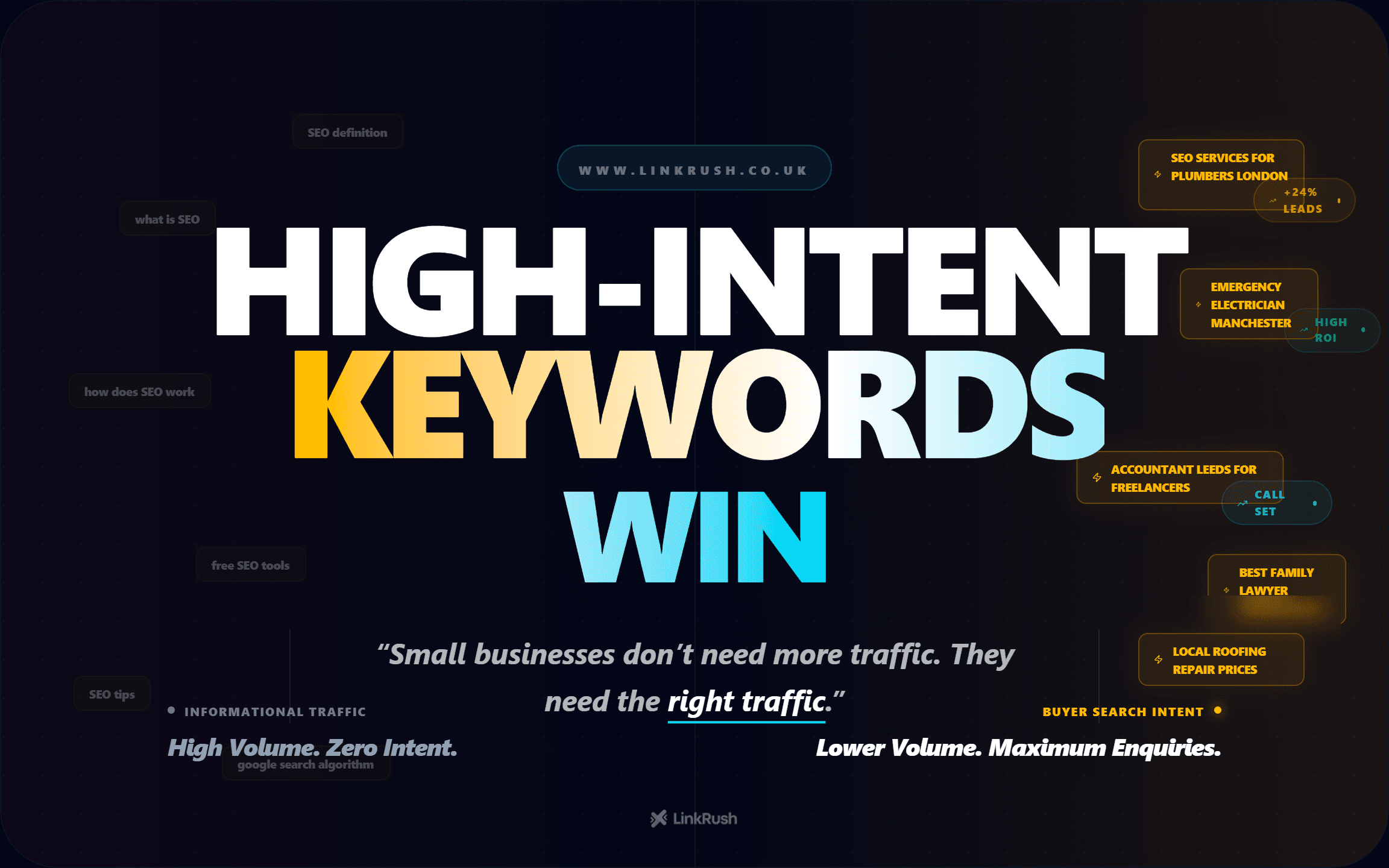
Most small businesses don’t need “more traffic.”
They need the right traffic that converts.
There’s a big difference between ranking for:
- “what is SEO”
- and “SEO services for plumbers London”
One brings visitors.
The other brings buyers. We’ve seen small businesses generate more enquiries from a handful of highly specific service searches than from broader informational traffic that never converts.
Especially in local SEO, intent usually matters more than volume.
Affordable SEO isn’t about doing everything—it’s about doing the few things that actually lead to enquiries. That's also why many small businesses struggle with traditional SEO services.
The problem usually isn’t SEO itself—it’s paying for activity that isn’t connected to commercial outcomes.
Find High-Intent SEO Keywords for Small Businesses
Instead of chasing broad keywords, I’d go after:
- Location-based searches (e.g. “accountant in Leeds for freelancers”)
- Service + urgency terms (e.g. “emergency electrician Manchester”)
- Comparison or decision-stage queries
These searches are often made much closer to a buying decision.For many small businesses, local SEO opportunities are often the fastest path to qualified search traffic.
Which means even lower-volume keywords can outperform broader terms when the page matches intent properly.
That’s where small businesses can win—without spending thousands.
Build Service Pages That Convert
Most “affordable SEO” strategies push blogs.
But service pages are where money is made.
For many small businesses, improving core SEO landing pages produces stronger ROI than publishing large volumes of low-intent content.
If I had a tight budget, I’d focus on:
- 3–5 core service pages
- Clear value proposition
- Real examples or proof
- Internal links to supporting content
One well-structured service page targeting a commercially relevant keyword can outperform dozens of low-intent blog posts—especially for small businesses without large authority sites.
In fact, many small businesses publish too much content before they’ve built pages capable of converting search demand into leads.
Earn Relevant Links That Support Rankings
This is where most small businesses either overspend—or waste money entirely.
Cheap SEO often means :
- Low-quality directory links
- Irrelevant guest posts
- Spammy outreach
One of the biggest problems is that many small businesses struggle to evaluate whether an SEO provider is actually building long-term value.
Instead, I’d focus on:
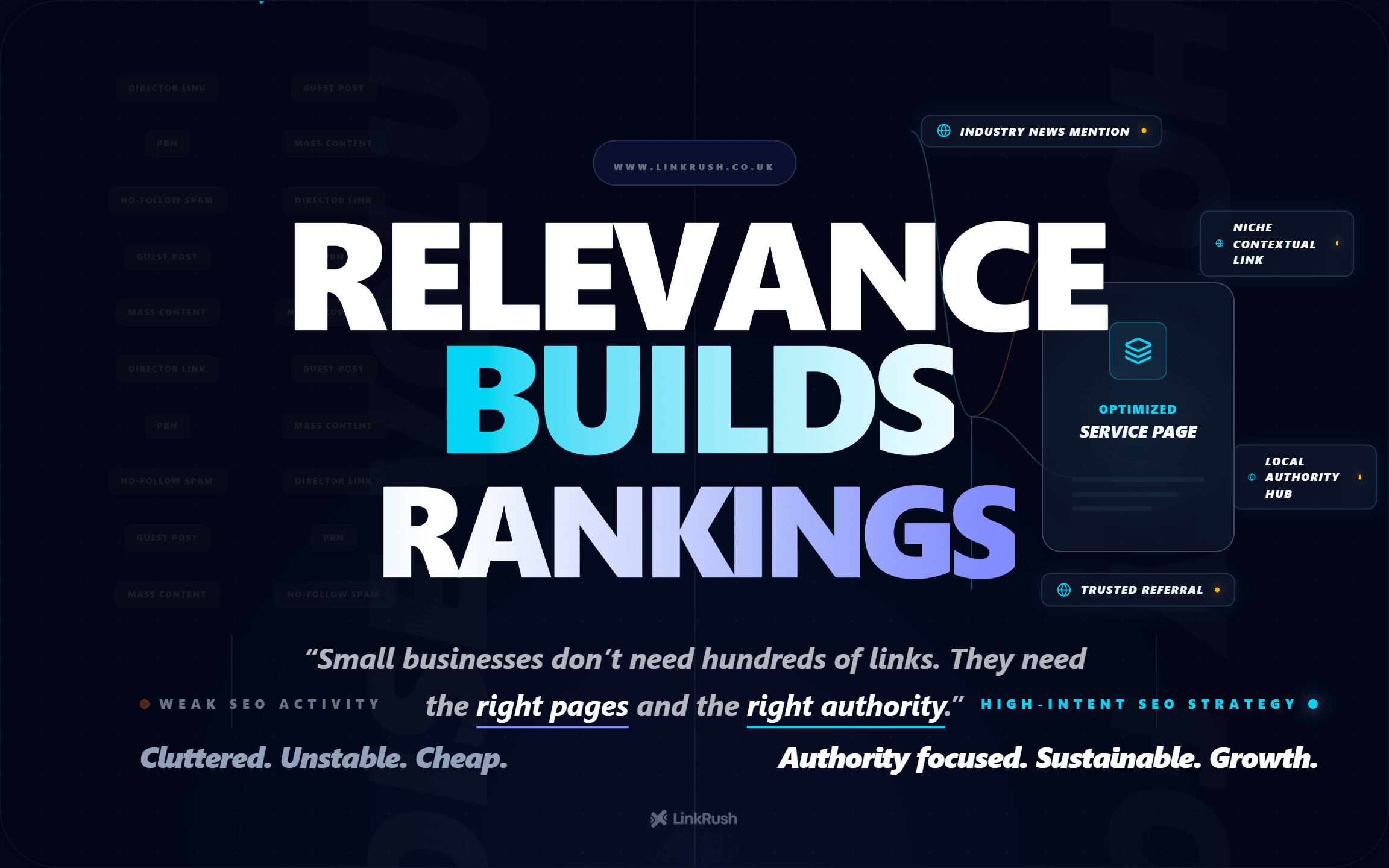
- Niche-relevant websites
- Local publications or blogs
- Industry-specific placements
That’s becoming even more important as search visibility increasingly depends on authority, mentions, and contextual relevance.
You don’t need 100 backlinks.
You need a handful that make sense in context. In many cases, relevance and placement quality influence performance more than raw link volume. That’s especially true for small businesses trying to build authority without wasting budget on low-impact links.
Improve Existing SEO Before Creating More Content
Before creating anything new, I’d audit:
- Existing pages that aren’t ranking
- Pages stuck on page 2–3. Often, these pages don’t need a complete rewrite.
They just need better intent alignment, stronger internal links, or clearer topical focus.
- Content with impressions but no clicks
Improving what already exists is often the most affordable SEO move.
Because the foundation is already there—you just need to strengthen it.
Ignore Vanity SEO Metrics
Affordable SEO breaks down when expectations are wrong.
You don’t need:
- Weekly ranking reports
- Dozens of new keywords
- Constant content output
What matters is whether SEO is generating:
- qualified enquiries
- calls from the right customers
- actual revenue opportunities
Everything else is secondary.
So What Does “Affordable SEO” Actually Look Like?
If I had to define it simply:
Affordable SEO is a focused strategy that prioritises revenue-driving actions over volume-based activity. That shift is also changing how small businesses approach modern SEO strategy and organic growth.
That increasingly aligns with Google’s focus on people-first content and search usefulness.
It’s not about doing less.
It’s about doing what matters first.
Most small businesses don’t fail at SEO because they ignored it. They fail because the budget gets spread across too many low-impact activities at once.
The Reality Most Agencies Won’t Tell You
SEO takes time, especially for small businesses building authority in competitive markets. That’s particularly important for small businesses expecting immediate rankings from limited SEO campaigns.
But the difference is this:
A cheap strategy keeps you busy.
A smart, affordable strategy moves you closer to your first customer from search.
Who This Strategy Works For
This kind of SEO strategy tends to work best for:
- local service businesses
- trades and home services
- consultants and freelancers
- smaller eCommerce brands
- businesses competing in specific geographic areas
Especially when budget is limited and every lead matters.That’s particularly true for UK SMEs operating with smaller marketing budgets and tighter margins.
The businesses that usually see the best SEO results aren’t always the ones spending the most.
They’re the ones focusing resources on the highest-leverage actions first.
What Affordable SEO Should Actually Deliver
If your SEO isn’t tied to actual business outcomes, it’s not affordable—no matter how cheap it looks.
Because for small businesses, the cost of ineffective SEO usually isn’t just lost traffic—it’s lost time, delayed enquiries, and slower growth.
Frequently Asked Questions
How much should small businesses spend on SEO?
It depends on competition, geography, and goals, but most small businesses benefit more from focused SEO execution than large-scale content production.
Is affordable SEO worth it for local businesses?
Yes—especially when strategy focuses on local intent, service relevance, and conversion-focused pages.
What’s the difference between cheap SEO and affordable SEO?
Cheap SEO usually prioritises volume. Affordable SEO prioritises impact and commercial relevance.
Can small businesses rank without hundreds of backlinks?
In many local and niche markets, relevance and intent alignment matter more than sheer backlink volume.
If you’re trying to figure out where your SEO budget should actually go, we built Linkrush to focus on what most strategies miss—relevance, placement, and intent.
Because increasingly, search visibility comes from relevance, intent alignment, and trust—not just publishing more content.Especially as AI-generated search experiences continue changing how users discover businesses online.
It rewards precision.