When I first started working in SEO, backlinks were simple—Dofollow links Passed value while nofollow links didn’t. Especially in early UK and EU link building strategies. This perspective made the foundation on which strategies, budgets and even direct client expectations were shaped.
Fast forward to contemporary time, and a fair bit of trial and error , I can say this with utmost certainty: this mindset slaughtered our early growth.
After working with UK publishers, local councils, universities and even a few adamant editors at news outlets across UK and EU link building campaigns we learned something the hard way. Nofollow backlinks do help SEO, just not in the basic outward way we once believed.
Let me explain this based on what we’ve actually seen across UK and European campaigns.
How to Identify a Nofollow and Dofollow link
Nofollow Link
- Right-click the link on a webpage and select "Inspect" or "Inspect Element" to open developer tools.
- Locate the <a> tag for the link in the HTML.
- Check for the rel attribute: If you see rel="nofollow", rel="sponsored", or rel="ugc", it's a nofollow/hint link.
Dofollow Link
If you link to a LinkRush blog without any rel attribute, it is dofollow by default.
<a href="https://www.linkrush.co.uk/blog/">LinkRush SEO Blog</a>
What this does:
- Passes link equity (PageRank)
- Helps rankings directly
- Best for: Guest posts, Editorial mentions, Relevant blogs and partnerships
Nofollow Link
A nofollow link explicitly tells Google it’s a hint, not a vote.
<a href="https://www.linkrush.co.uk/blog/" rel="nofollow"></a>
What this does:
- Does not pass direct PageRank
- Still helps with: Brand mentions, Entity recognition, Discovery & trust signals
- Common on: News sites, Forums, Directories, GOV / media sites
Nofollow + Sponsored (Realistic Media Use Case)
<a href="https://www.linkrush.co.uk/blog/" rel="nofollow sponsored"> </a>
Used when: Content is paid, sponsored, or promotional and Required by most publishers
The Old Myth: “Nofollow Means No Value”
For years, SEO advice was forthright and direct:
“If it's nofollow, Google shrugs it off.”
That idea may have held some truth years ago. Today, it doesn’t reflect how search really works.
SEO now is less about link mechanics and more about context, trust, and behavioural signals key entity SEO signals Google uses across Europe. That’s how Google reads authority
Google’s algorithm also behaves more like the human mind evaluating things based upon their behaviour, perception and need\ relatability. They don’t ask:
- Is this link dofollow?
Rather they ask:
- Why is this brand being mentioned?
- Where is it being mentioned?
- Who is talking about it?
- How often are people discussing it?
- How is it relevant today?
- What is the core element that attracts people's attention?
That’s the shift most SEOs miss. We definitely did at first.
Nofollow vs Dofollow Backlinks.
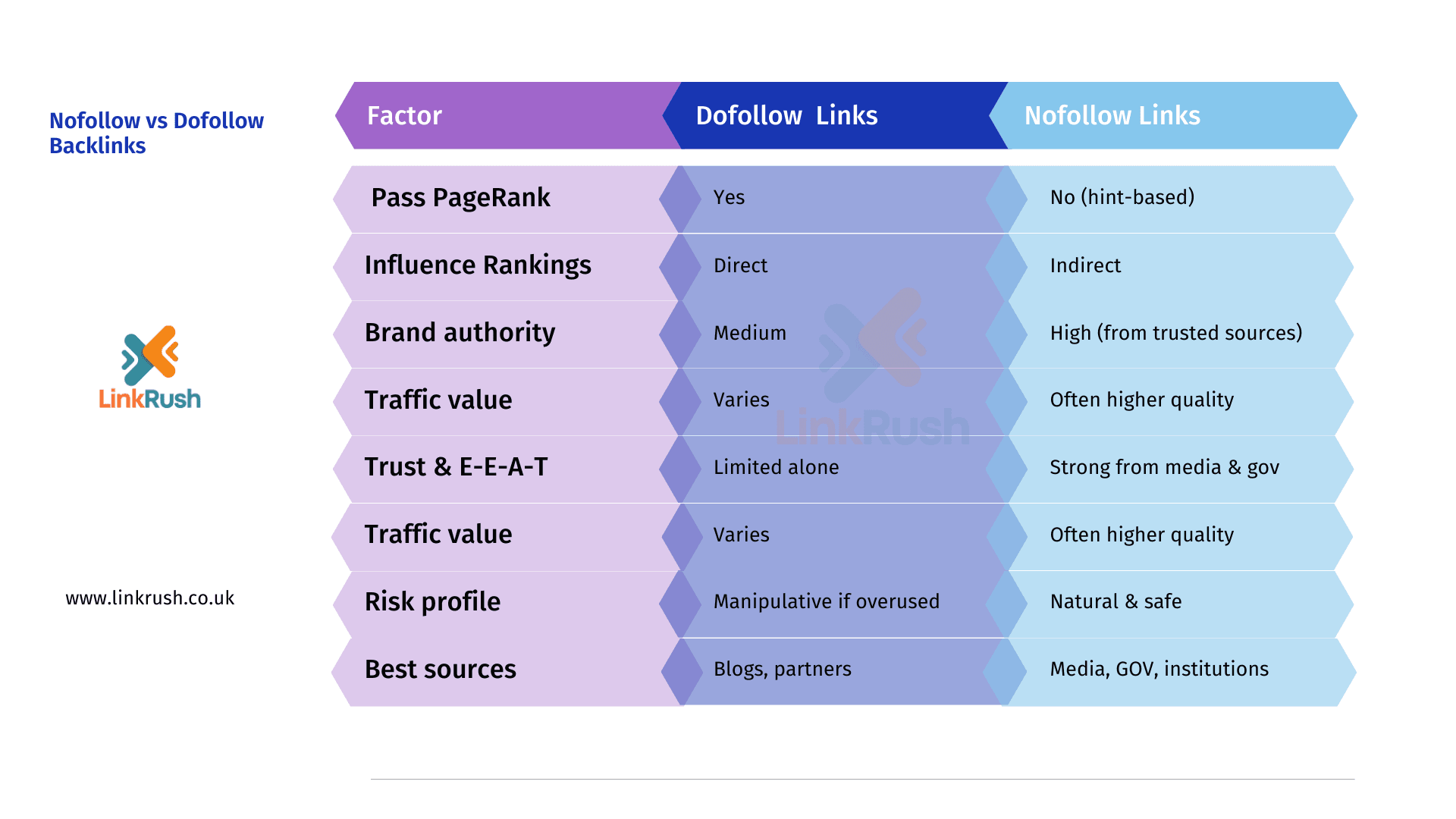
Best practice: You need both — especially in UK & EU markets.
BBC Mentions and the “Invisible Authority Boost”
One of the most intriguing patterns that grabbed our attention came after a brief mention of our client on BBC News Online .As expected, the link was nofollow — a standard BBC editorial policy.
What grabbed our attention wasn’t referral traffic {which was modest}, It was what happened quietly afterwards.
- Their brand started appearing frequently in Google’s “people also search for”
- Several supporting blog posts jumped 3-5 positions without any new backlinks
- Google started indexing new pages faster than before.
That’s when we understood. Google appears to treat mentions from trusted UK publishers as entity validation, even when no link equity is passed.
GOV.UK Citations and Trust Signals
We later contributed insights to a public consultation summary hosted on their websites. The citation included our brand name and website, again marked nofollow..
This single mention:
- Increased trust from UK-based B2B clients [many mentioned seeing us “on a government site”]
- Compliance-related keywords improved
- Private-sector blogs later linked back while citing the same source
In highly regulated UK industries, nofollow links from government citations act like digital trust badges a core part of European SEO best practices
UK & EU Industry Directories That Still Matter
Many UK industry bodies, especially in healthcare, legal services, and sustainability,use nofollow links by default.
Examples include:
- Chartered Institute directories
- Chamber of Commerce listings
- Trade associations member pages
Despite this, these listings:
- Strengthen local and regional SEO signals
- Increase branded searches
- Help Google associate brands with specific sectors
In local and niche SEO, relevance often beats raw link equity
How do Nofollow links contribute to brand authority?
They do it in three understated ways.
1. Brand Signals [often underestimated]
When a brand is mentioned consistently by reputable sites , Google starts to understand:
- The brand is legitimate
- It’s relevant to a topic or industry
- It is the part of ongoing conversation
After a BBC mention, we saw ranking improvements across multiple pages, not just the one referenced. That’s not coincidence.
2. Traffic That Actually Converts
This part is often ignored.
A nofollow link from Gaurdian, Abc, sent users who stayed longer, explored more pages, and returned later.
These behavioral signals– time on site, repeat visits, interaction — lined up closely with long-term ranking improvements.
SEO today isn’t just about links. It’s about what users do after they arrive, a ranking factor increasingly visible across European search results.
3. Natural Link Profile Matters
Most European websites generally attract:
- Citations
- Press mentions’
- Government or non-profit references
The majority of these are nofollow.
A healthy backlink profile includes:
- Dofollow
- Nofollow
- Branded mentions
Once we balanced this properly, rankings stabilised and penalties stopped being a concern. In competitive European niches like healthcare, finance, and education, an all-dofollow profile simply looks unnatural.
What Google Actually Says?
John Mueller has clarified this more than once:
“Nofollow links are treated as hints. We use them for things like discovery and understanding the web, not just ranking signals.”
Google doesn’t ignore nofollow links. It interprets them entity SEO signals, discovery data, and brand understanding.
Final Thoughts:
If we are constructing a brand in UK and EU link building and ignoring nofollow backlinks, you’re playing by outdated rules.
Modern SEO is about:
- Trust
- Real users
- Long-term authority
Nofollow backlinks don’t replace dofollow links — they make your SEO believable
Want to know which of your nofollow backlinks are actually helping your rankings?
At LinkRush, we audit real brand mentions, entity signals, and link profiles across the UK & Europe — no vanity metrics.
Get a free backlink reality check from LinkRush