If I had to start a small business in the UK today, I wouldn’t begin with SEO tools, keyword lists, or content calendars.
I’d start with one question:
“What’s the fastest way to get a paying customer from search?”
Because that’s where most small business SEO in the UK goes wrong.
It starts with activity instead of intent.
I’ve seen founders spend months publishing blogs, tweaking pages, even buying SEO packages for small business UK — and still end up with nothing meaningful to show for it. Not because they didn’t try hard enough, but because they were solving the wrong problem.
They were trying to do SEO instead of trying to win customers.
If you're trying to make sense of small business SEO in the UK right now, it really comes down to three decisions:
- what kind of SEO you should focus on
- what you should realistically expect to pay
- and which parts of SEO actually move rankings
I’ll break these down — but not in the usual “SEO checklist” way.
The uncomfortable truth about SEO in the UK
The uncomfortable truth about SEO in the UK is this: the market is brutal in a very specific way.
It’s not just competitive — it’s crowded with average.
There are thousands of small businesses publishing the same kind of blogs, buying the same kind of backlinks, and following the same recycled advice. And most of it cancels itself out.
That’s why even when founders look for affordable SEO for small businesses UK, the results often feel underwhelming.
The issue isn’t affordability — it’s allocation.
Most budget SEO spreads effort too thin — a bit of content here, a few backlinks there, some technical fixes in between. But none of it is strong enough to create real momentum. This is what that looks like in practice:
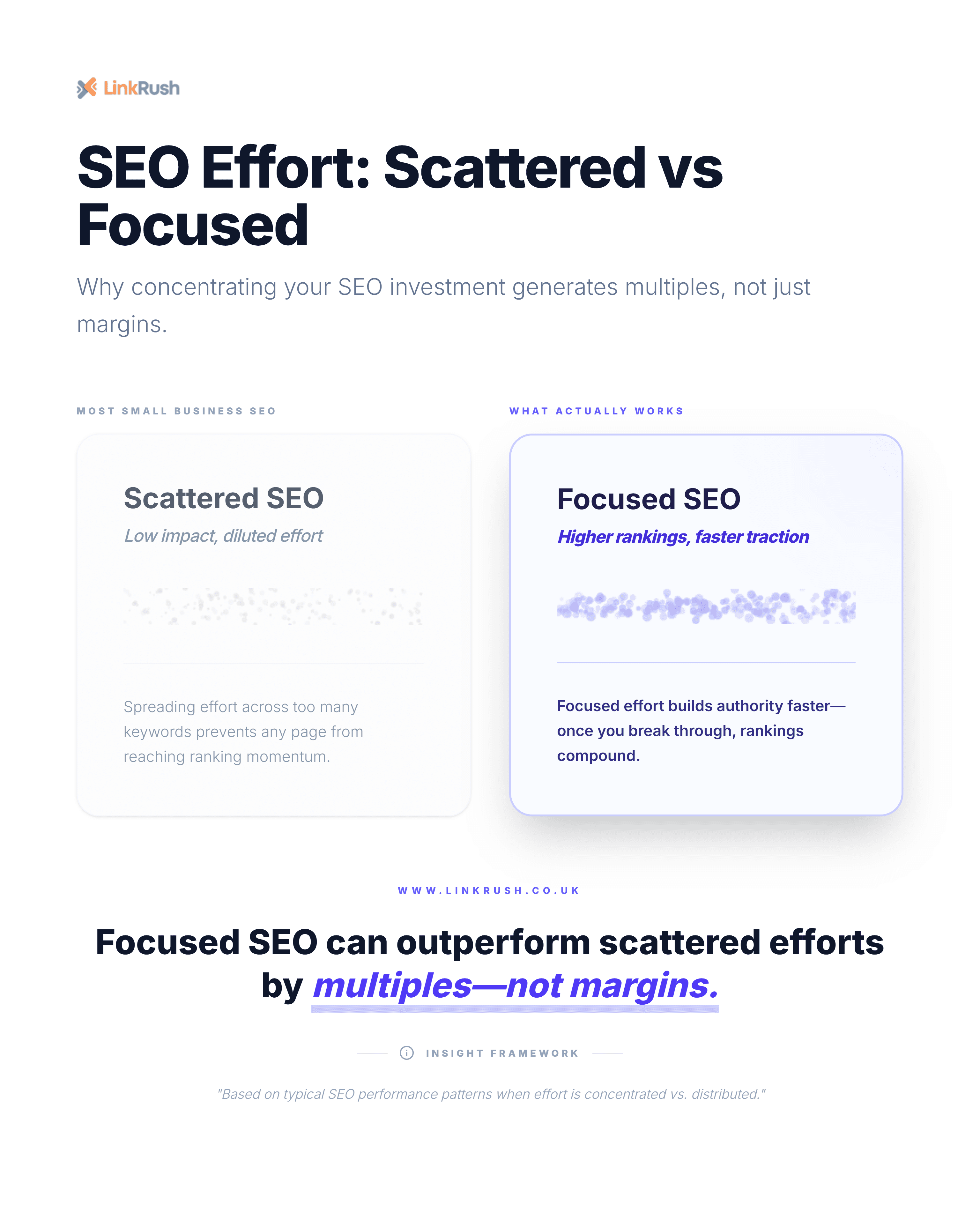
Affordable SEO should mean focusing your budget on the small number of actions that actually move rankings — not trying to do everything at once, which is exactly what affordable SEO for small businesses in the UK should look like in practice.
Cheap SEO fails. But so does expensive SEO when it’s unfocused.
What Small Business SEO in the UK Actually Includes
Before going further, it’s worth clarifying what “small business SEO UK” actually means — because most definitions are either too broad or too vague.
In practice, it comes down to a few core things: building pages that target the right search intent, creating supporting content that answers real buying questions, earning relevant backlinks that build authority, and making sure your site actually converts visitors into leads.
This is what most SEO packages for small business UK claim to cover.
But in reality, very few execute all of these well — which is why results vary so much.
What I realised after working with small businesses
At some point, a pattern became obvious.
The businesses that were actually getting results weren’t doing more SEO.
They were doing less — but with intention.
Instead of spreading their effort across 20 different pages, they focused on one page that actually deserved to rank. Then they supported it with a couple of genuinely useful pieces, and did just enough to make Google take them seriously.
That “just enough” part is where things get interesting.
Because it’s usually not content.
It’s authority.
Where most founders hesitate (and why it costs them)
This is the point where many business owners get stuck.
They’ve built a decent site. They’ve written some content. Maybe they’ve even looked into how much does SEO cost for small business UK and realised the pricing is all over the place.
So they pause.
Or worse — they choose the safest option: a low-cost package that promises consistency.
This is where expectations break down. SEO doesn’t work instantly — and most timelines people have in mind aren’t realistic, especially if you’ve ever looked into why SEO results take time
But here’s the bigger problem:
SEO doesn’t reward consistency on its own. It rewards signals — and one of the strongest signals is that other websites are talking about you.
How Much Does SEO Cost for Small Business UK? (Real Answer)
At this point, most founders start asking the obvious question:
How much does SEO cost for a small business in UK?
And the frustrating answer is: it depends — but not in the way agencies usually explain it.
Typical ranges look like this:
- £300–£700/month → basic SEO with limited impact
- £700–£1,500/month → focused strategy with real potential
- £1,500+ → competitive niches or faster growth
But pricing only makes sense when tied to focus — which is exactly what SEO pricing for small businesses in the UK
A smaller budget, used in the right place, will outperform a larger one that’s spread across too many activities.
That’s why some businesses see traction quickly — while others stay stuck despite ongoing spend.
The part nobody explains properly: link building
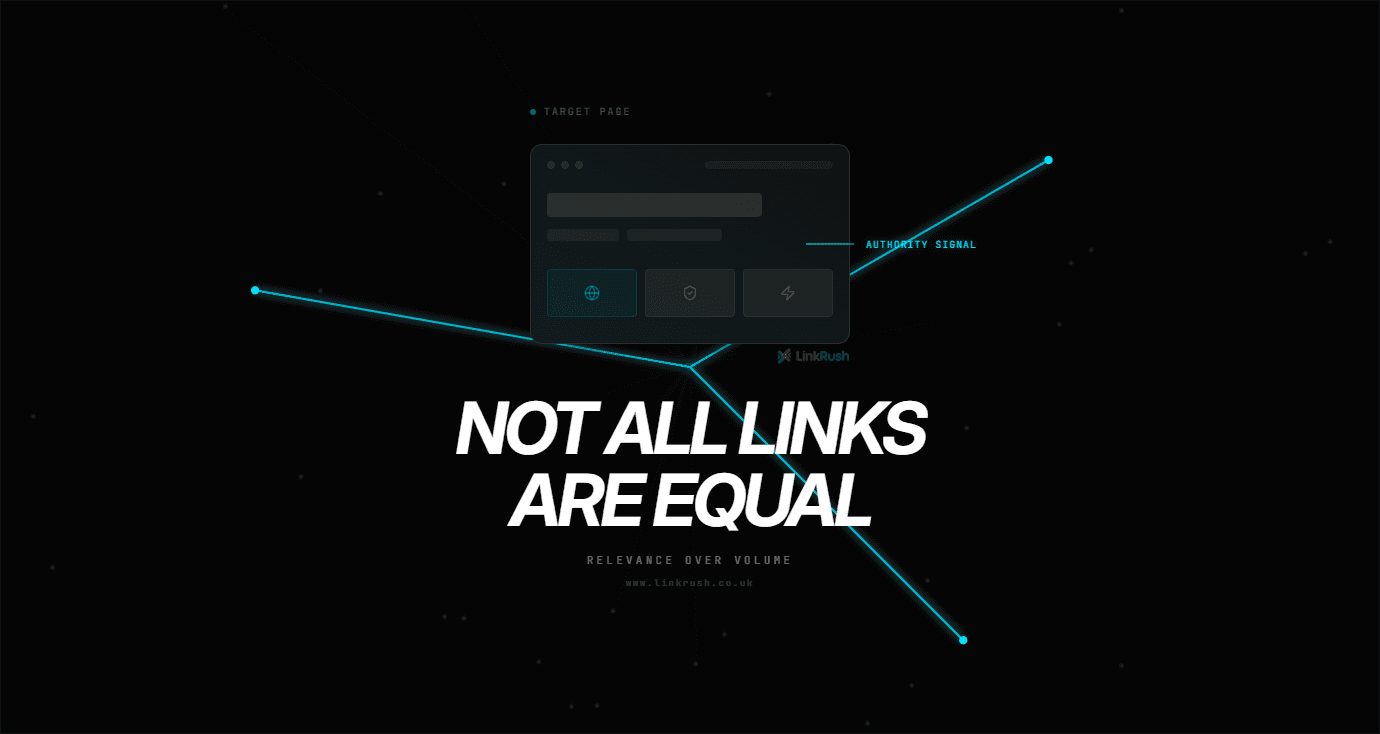
Link building has a bad reputation, mostly because of how it’s sold.
Bulk links. Outreach templates. “100 backlinks for £50.”
These are exactly the kinds of common link building mistakes that hold most sites back.
That’s not what moves rankings — especially not in the UK market.
What actually works is much simpler, and much harder to fake.
Getting mentioned on websites that already have real traffic, real audiences, and some level of trust.
This is also why digital PR and brand mentions are becoming more important, especially as AI search systems prioritise trusted sources — something that’s already changing how AI is transforming PR
When that happens, something shifts.
Your pages don’t just exist anymore — they start to carry weight.
If you’ve never seen that effect, it’s hard to appreciate how big the difference is. But once you do, you realise why most SEO efforts feel flat.
They’re missing that layer.
I’ve broken this down properly in link building for small businesses — especially how to earn links that actually influence rankings, not just inflate metrics.
One of the most reliable ways to do this is through editorial placements and guest posting — but only when it’s done with relevance in mind, not just volume.
Because once you understand how authority works, SEO starts to feel a lot less random.
Choosing Between SEO Packages in UK
This is also where most confusion around SEO packages for small business UK comes from.
On the surface, packages look comparable — similar pricing, similar deliverables.
But the real difference is focus.
Some packages prioritise output — the number of blogs, backlinks, and how frequently things are updated.
Others prioritise impact: improving one core page, building authority around it, and supporting it with targeted content.
Only one of these approaches tends to produce results. The problem is, not all backlinks are equal — relevance matters far more than raw metrics which is why understanding link relevance is critical when evaluating backlinks.
What I’d actually do (no fluff, no scaling)
If I stripped everything back and started from zero, here’s exactly how I’d approach small business SEO in the UK:
Then I’d focus on three things:
- building one page that actually deserves to rank
- supporting it with a couple of genuinely useful pieces
- and getting a handful of strong mentions
Not dozens. Not hundreds. Just enough to move the needle.
If you’re wondering what “enough” actually looks like, it usually comes down to how many backlinks a new website really needs.
That’s it.
No content machine. No complicated funnel.
So how much should you actually spend?
This is where most advice gets vague, so let’s keep it simple.
You can spend £500 a month on SEO and get nothing. You can spend £1,500 and still struggle.
Or you can spend less — but put it into the right places — and start seeing traction.
That’s why the question “how much does SEO cost for small business UK” doesn’t have a clean answer.
Because cost only makes sense in the context of focus.
If you’re spreading your budget across content, links, technical fixes, and random experiments, it disappears quickly.
But when you concentrate on it — even a modest budget can start to work.
The thing most founders don’t realise
SEO isn’t slow because it takes time. It’s slow because most people dilute their effort.
They try to rank for multiple services, target dozens of keywords, and build links at scale — and nothing compounds.
And nothing compounds.
But when you narrow it down — one page, one topic, one clear intent — things start to move. Not instantly. But predictably.
Small Business SEO UK: Frequently Asked Questions
How much should a small business spend on SEO in the UK? It varies, but most businesses fall between £500 and £1,500 per month. What matters more than budget is how focused that spend is.
Are SEO packages for small businesses worth it? They can be — but only if they prioritise impact over output. Packages that focus on volume (more blogs, more links) often underperform compared to focused strategies.
What is affordable SEO for small businesses in the UK? Affordable SEO isn’t about spending less — it’s about spending efficiently on the few actions that actually influence rankings.
What matters more: content or backlinks? Both matter, but in competitive UK markets, authority (backlinks) is often the deciding factor once your content is good enough.
Still not seeing results from SEO?
It’s rarely about doing more — it’s about focusing on what actually moves rankings.
Explore our Small Business SEO Services UK and see how a focused approach can start driving real traction.
Final thought
If you’re a small business owner in the UK trying to figure out SEO right now, ignore most of what you’re told.
You don’t need more content, tools or a bigger package
You need a clear page, focused strategy and just enough authority to make it count. Everything else is noise.
If you're currently trying to figure out where your SEO effort is going wrong — whether it's your content, your links, or your overall strategy — it's usually not a complicated fix.
It’s a focus problem.
And once you fix that, everything else starts to compound.